


Mycorrhizal Carbon:
The Foundation of a
Durable Carbon Sink

Mycorrhizal fungi not only sequester carbon in soil. They embed it in the soil’s geology within durable compounds that remain stable for millennia.

Today, 13.12 GtCO2e are sequestered annually in forests and other natural lands. Agricultural soils similarly have the capacity to sequester up to 8 GtCO2e annually.

However, the rise of modern agriculture, with intensive tillage and chemical overuse, has violated soil microbial ecosystems, releasing 785 GtCO2e into the atmosphere over the decades.

Our mission is to restore cropland’s
capacity to sequester carbon and
realize soil’s full potential as a
durable carbon sink.

How Does Mycorrhizal Carbon
Deliver High Durability

Photosynthesis

Mycorrhizal plants allocate up to 20% of their photosynthate to mycorrhizae. This means that up to 20% of photosynthesized carbon becomes Mycorrhizal Carbon.

Carbon
Contribution:

Up to 60% of plant-derived Soil Organic Carbon (SOC) is attributed to mycorrhizae.
60% of plant derived SOC Mycorrhizal Carbon

Durable Sequestration:

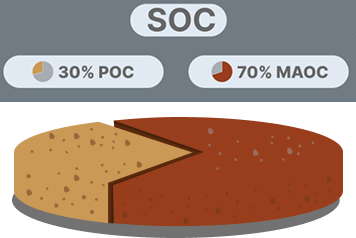
Mycorrhizae facilitate the rapid formation of Mineral-Associated Organic Carbon (MAOC), the most stable form of soil carbon, which makes up to 66–87% of SOC.

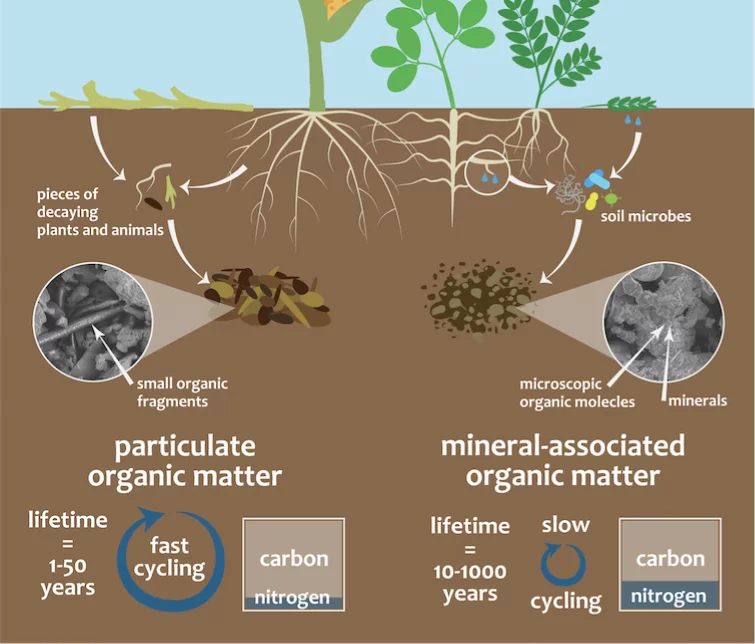
SOC is comprised of two main stable forms:

Particulate Organic Carbon (POC):
durability for decades.

Mineral-Associated Organic Carbon (MAOC): faster-cycling and persistent fractions, with the persistent fraction lasting centuries to millennia.

Mineral-Associated Organic Material

MAOC forms when Dissolved Organic Carbon (DOC) binds to exposed mineral surfaces, particularly clay, with strong covalent bonds.

Mycorrhizae support and accelerate this process. Under the right conditions – high DOC concentration, sufficient nitrogen availability, clay surface area and the presence of mycorrhizal fungi – MAOC formation can occur within months.

While plants photosynthesize carbon from the atmosphere, mycorrhizae lock it in the soil for the long-term, putting the 2nd largest carbon sink in the world under our feet.

The Bottom Line
Mycorrhizal Carbon Delivers Durable
CDR at Scale

60%
of Soil Carbon
Lost

Today, most croplands have become net carbon emitters, having lost an estimated 60% of their optimal SOC due to industrial agricultural practices

1
Main Pathway
to Bring It Back

Because mycorrhizae are carbon’s main pathway into the soil, Mycorrhizal Carbon is the most cost-effective, scalable, high-integrity solution for durable CDR today.

At scale, the climate impact is significant:
1 million acres of mycorrhizal cropland can sequester megatons of CO₂

Durable Carbon Removal Through Mineral-Associated Soil Carbon

How mycorrhizal inoculation builds mineral-associated organic matter (MAOM), the soil carbon pool that is durable from centuries to millennia, on par with biochar.

Let your ground work

We look forward to connecting with you!

Get in touch
Skip to content