
Maximize Corn Yields with Mycorrhizal Fungi
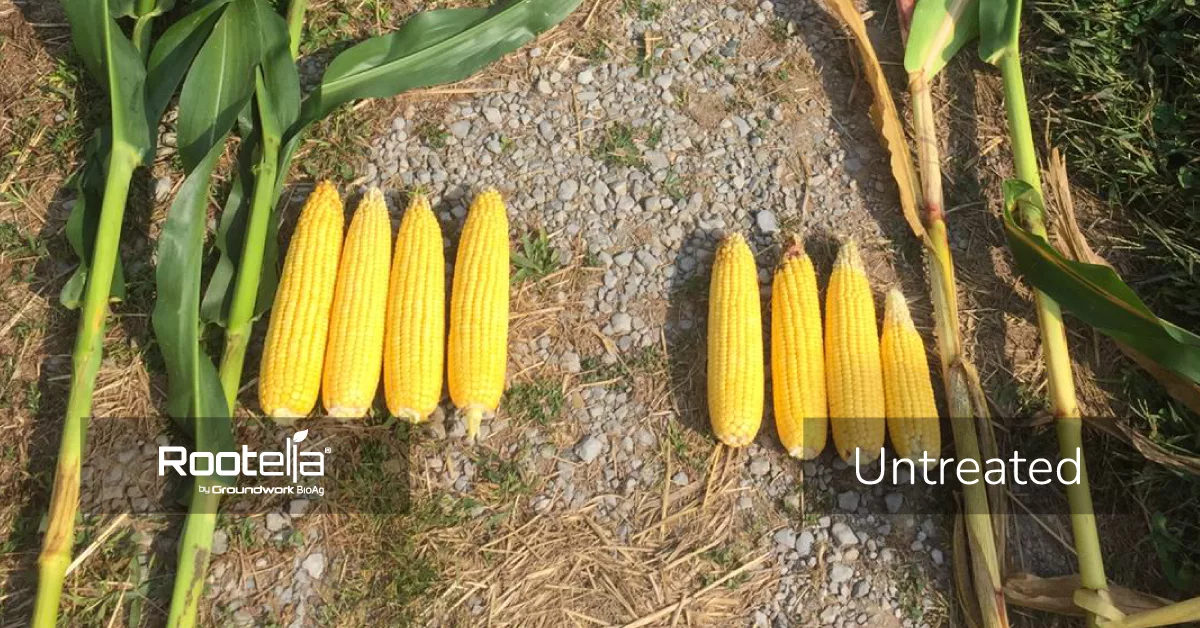
Corn Yield Begins Underground, with Rootella
By Shelby Denker
The Challenge in Corn Production
Corn is one of the roughly 90% of global crops that depend on an intact soil mycelial system to thrive. Today, declining soil health, rising climate stress and prohibitive input costs are converging in a vicious cycle – making it harder to maintain consistent yields while increasing pressure on farm margins.
Decades of intensive practices and fertilizer overuse have degraded soils, while more frequent extreme weather events, including drought and floods, further deplete soil, increase erosion and accelerate phosphorus runoff. Farmers find themselves applying more inputs each year, just to maintain the same yield.
At Groundwork BioAg, we believe that working with nature is the only way to ensure that nature works with you.
For millennia, healthy crops depended on mycorrhizal fungi. These fungi strengthen and extend root systems, enrich soil organic matter, and unlock access to nutrients and water beyond the reach of roots alone. Restoring mycorrhizae to croplands is one of the most effective, nature-aligned ways to protect your investments and buffer corn crops against stress while investing in long-term productivity that won’t wash away in the next flood.
Why Mycorrhizae Matter for Corn
Mycorrhizal fungi are not just a microbe – they are a living partnership between fungi and plant roots. This symbiosis can effectively extend root systems by up to 100x, allowing corn plants to access nutrients and moisture far beyond the reach of roots alone.
In exchange for photosynthesized carbon, mycorrhizae deliver phosphorus, nitrogen, water, and micronutrients, while forming the biological infrastructure of healthy soil. Their mycelial networks stabilize soil structure, support diverse microbial communities, and improve overall soil function.
For corn, mycorrhizae act as a critical resilience layer—helping plants endure drought by accessing deep moisture and maintain stability during flooding. In effect, they provide a natural buffer below ground to protect crops from increasingly unpredictable conditions above.
From Mycorrhiza to Corn with Rootella
Rootella Mycorrhizal Inoculants are formulated with highly concentrated, naturally potent strains of mycorrhizal fungi. Available in granular, powder, and liquid formulations, Rootella fits seamlessly into commercial corn management plans. The Rootella portfolio is compatible with standard seed treatment protocols and can also be applied through irrigation or as an over-treat on pretreated seed—requiring no changes to existing practices.
Key Rootella Benefits for Corn Farmers include:
- Yield Increase: Crop yield and quality improvement
- Input Savings: Optimized fertilizer ROI and reduced water needs
- Stress-Resistance: Better durability under stress conditions
- Organic Matter Aggregation: Significant soil carbon sequestration
Designed with farmer needs in mind, Rootella offers simple, flexible applications that integrate easily into current farming systems and work synergistically with virtually all other biological inputs—amplifying their effectiveness rather than competing with them.
Real-World Results and Farmer Testimonials
Minnesota Farmer Tim Kanten, reports: “I’m seeing an average of 6 bushel per acre difference where I applied Rootella on corn.”
Across four multi-state trials, Rootella delivered an average yield increase of 11.8 bushels per acre.
Corn Yield Begins Underground, with Rootella
The Rootella effect goes beyond that of a basic input – it rebuilds vital infrastructure. By regenerating the biological network beneath the soil surface, it helps corn plants access what they need naturally, enabling farmers to increase yields without relying on ever-higher fertilizer rates.
Interested in learning how Rootella can support your corn operation?
Contact Shelby at shelbyd@groundworkbioag.com, or Andrew at aduff@groundworkbioag.com


