
Don’t Pay Twice for Phosphorus You Bought Once
How Rootella Unlocks the P Already Sitting in Your Soil
By Shelby Denker, District Sales Manager
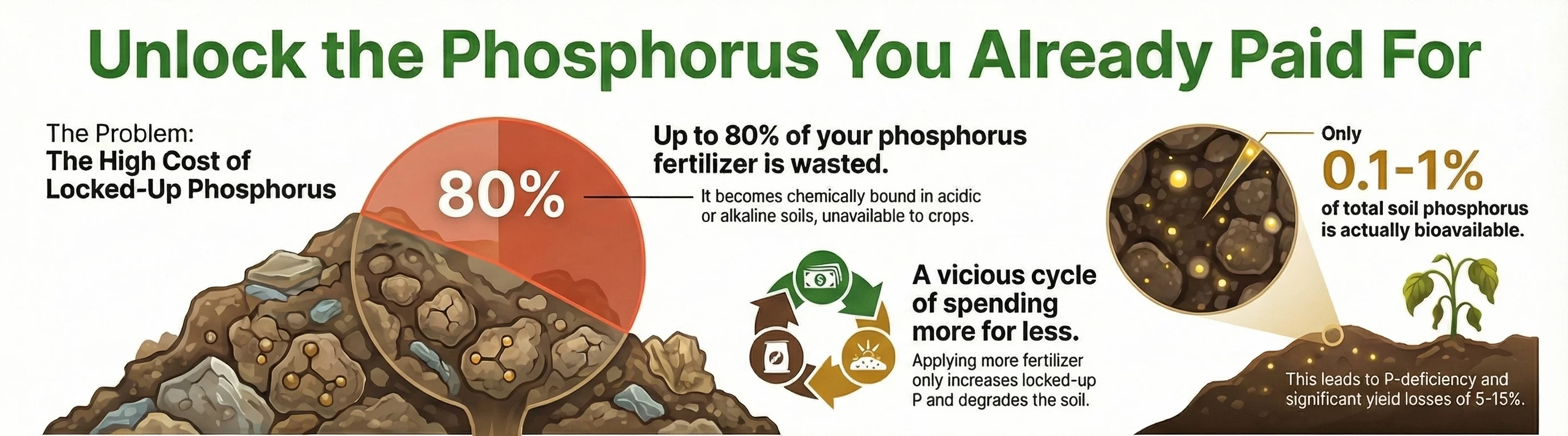
Phosphorus (P) is essential for crop growth, yet most of the fertilizer growers apply never reaches their plants. Instead, up to 80% of applied phosphorus becomes chemically bound in the soil, locked away in inaccessible forms.
This means that you’ve already paid for phosphorus that your crops can’t use. It’s still in your soil – sitting idle.
Rootella mycorrhizal inoculants act as the biological key to unlock that “legacy phosphorus” and make it available again.
Why Does So Much Phosphorus Fertilizer Go to Waste?
Phosphorus inefficiency is one agriculture’s major hidden costs:
- Approximately 50% of all agricultural ecosystems globally are P-deficient, causing yield losses of 5-15%.
- In acidic or alkaline soils, up to 80% of applied P fertilizer becomes unavailable to plants through adsorption, fixation, or transformation into unavailable forms.
- As a result, only about 0.1-1% of total soil phosphorus is bioavailable to plants.
The Vicious Cycle
To compensate for that locked-up legacy P, many farmers apply more fertilizer, spending more just to maintain yields. But this only worsens the problem: more applied fertilizer means more chemically bound unavailable P, more soil degradation and lower ROI on inputs.
The Mycorrhizal Solution: Nature’s Nutrient Network
This is where Rootella mycorrhizal inoculants make a difference.
Mycorrhizae – the beneficial fungi active in Rootella – engage in symbiosis with plant roots. They effectively extend the root zone by 10-100x, enhancing nutrient access and uptake while supporting a thriving soil microbiome.
In healthy soils, mycorrhizal fungi naturally solubilize and mobilize phosphorus for surrounding plants. However, decades of intensive farming have degraded mycorrhizal networks in croplands to the extent that they often lack sufficient mycorrhizae to bring the legacy P in soil back into circulation.
Rootella restores this natural system. When applied at planting, Rootella repopulates cropland with these vital fungi – regenerating soil ecosystems and reactivating nature’s nutrient cycle.
How Rootella Unlocks P for Long-Term Farm ROI
Rootella’s mycorrhizae extend plant root systems and chemically unlock bound phosphorus by modifying soil chemistry. In soils with suboptimal pH, phosphorus binds to aluminum (acidic soils) or calcium (alkaline soils), making it unavailable to plants. Mycorrhizae chemically unbind this “legacy P”, converting it into plant-accessible form.
The results are both immediate and long-lasting.
- Immediate phosphorus savings – up to 50% less fertilizer use without compromising yields
- Improved crop performance – stronger growth, higher stress tolerance and enhanced yields
- Long-term soil health – mycorrhizae strengthen the biological foundation of soil fertility from season to season
As fertilizer prices continue to rise, Rootella pays for itself in both phosphorus savings and yield improvements.
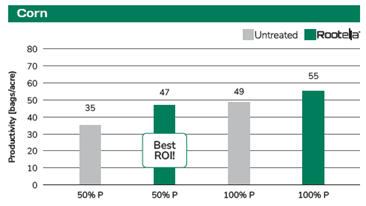
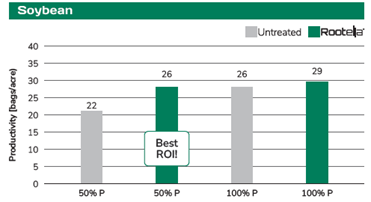
Rootella’s performance is backed by extensive field data and farmer experience. Across crops and regions, the results are consistent: better phosphorus efficiency, healthier resilient crops, and improved bottom lines.
You paid for your inputs – now let Rootella pay you back — in P savings, yield performance, and soil vitality.
Get in touch with Shelby Denker, District Sales Manager, to learn how Rootella can boost your P efficiency and your bottom line.
🌱 Let Your Ground Work


